

Written by the HealthWealthCare Content Team | Reviewed by Hritik Banga, Healthcare Content Expert | Last updated: November 2026
Quick Answer
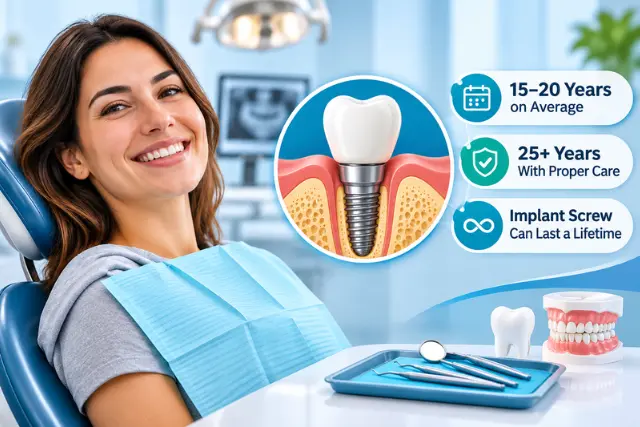
If you’re wondering how long do dental implants last, they typically remain functional for 15-20 years or longer with proper care. The titanium implant screw can potentially last a lifetime, while the crown attached to it may need replacement over time due to normal wear and tear. Factors such as oral hygiene, smoking, jawbone health, teeth grinding, and regular dental checkups can affect how long your dental implant lasts. With proper maintenance, many dental implants can remain functional for 25 years or more.
You’re about to get dental implants, and honestly – one of the biggest questions on your mind might not be just do they work, but are they actually worth the money? That money can be anywhere from $3,000-6,000/ tooth, so knowing what that number means will give you a pretty good clue as to the kind of life span you can expect.
The bottom line? Dental implants are one of the longest lasting options for tooth replacement. But how long do dental implants last isn’t a straightforward yes or no answer. There’s a lot of factors involved, and this is something that you have a lot of control over.
I’ve taken a look at major clinical research, insurance reimbursement trends, and what dental professionals are advising their patients to give you an idea of how long you can reasonably expect your dental implants to last.
How Long Do Dental Implants Actually Last?
If you’re researching how long do dental implants last, the average lifespan is generally estimated at 15-20 years or longer. However, here’s where many people get confused. Your implant actually has two parts:
1. The Implant Screw (Fixture):
The implant screw is the titanium component embedded into your jawbone. With appropriate care and healthy bone support, it can last for several decades and potentially a lifetime. Your bone fuses around it through a process called osseointegration.
2. The Crown (Cap):
The crown is the visible tooth attached to the implant. It may need replacement over time because of normal wear, chipping, or material damage.
This is a lot like a house: the foundation (implant) can last for decades, while the roof (crown) may need replacing over time. This difference is important when considering how long do dental implants last.
Factors That Determine Implant Longevity
Not all implants last forever. Understanding how long dental implants last depends on several factors, including your daily habits, overall health, oral hygiene, and the quality of your jawbone.
Oral Hygiene Practices
Without a doubt, this is the most important factor. Non-smokers who brush twice daily and practice flossing while visiting the dentist for hygiene appointments live significantly longer with their implants than those who don’t. Saliva also plays an important role in maintaining oral health. Learn more about the role of saliva in dental health.
Smoking Status
2-3x the average failure rate compared to non-smokers. Smoking impairs blood flow and immune response which are both necessary to maintain healthy bone needed to support an implant. If you smoke and wish to have an implant, stopping may be the best thing you ever did.
Jawbone Density
A healthier, denser jawbone means your implant will last longer. Significant bone loss and osteoporosis, in particular, can shorten the life of an implant.
Bite force and Teeth Grinding
People who clench or grind their teeth at night with an implant need a night guard to prevent crown replacement.
Health Conditions
Chronic disease like diabetes, auto-immune conditions, and other health issues can lessen how long your implant lasts because of their effect on bone quality and the healing process.
Dental Professional Skill
Experience matters when it comes to implant placement. Well-trained, experienced implant specialists like prosthodontists and oral surgeons will provide the best outcomes compared to general dentists who are not trained in implant dentistry.
Real-World Implant Durability Statistics
Clinical research provides encouraging data. A study tracking implants over 20 years found:
- 95% of implants placed in the lower jaw survived the full 20-year period
- 90% of implants in the upper jaw achieved the same milestone
- Failure rates actually decrease over time—most failures occur within the first year
These numbers assume proper maintenance. Implants fail when bone deteriorates, typically due to neglect or unmanaged health conditions. Very few actually “break” under normal use.
These long-term results help explain how long dental implants last when patients receive proper treatment and maintain good oral hygiene. However, individual outcomes can vary depending on bone health, lifestyle habits, and ongoing dental care.
Crown Replacement: The Real Long-Term Cost
While the implant screw can last for decades, the crown may need replacing after years of regular use. This is another important factor to consider when asking how long do dental implants last. Here’s what this means for your wallet. If a dental crown or tooth becomes damaged, the cost of fixing a chipped tooth can also vary depending on the extent of the damage and the treatment required.
- Initial crown cost: $1,500-$3,000
- Replacement crown cost: $500-$1,500 (significantly cheaper because the implant is already in place)
- Replacement procedure: Typically a quick office visit without surgery
This is actually cheaper than other long-term tooth replacement options. Bridges fail entirely and need replacing every 7-10 years. Dentures degrade continuously and need adjustments, relining, and replacement every 5-8 years.
Insurance Coverage for Implants and Maintenance
This varies significantly by plan, which is why understanding your coverage matters before investing.
Most standard dental insurance treats implants as optional cosmetic procedures and covers little to nothing. Typical coverage gaps include:
- 0-50% of implant surgery costs (if covered at all)
- Limited coverage for diagnostic imaging
- Annual maximum limits that may not cover full implant treatment
However, preventive care (cleanings and exams) is typically covered at 100%. And if bone loss creates a functional issue rather than purely cosmetic one, coverage sometimes improves.
Check your specific plan. Better plans specifically mention implant coverage percentages. You can also explore whether you can use a health savings account for dental expenses to manage eligible dental treatment costs. If your current insurance excludes implants, you might find plans with 20-50% implant coverage for just $10-20 more per month.
Maintenance Tips to Maximize Implant Lifespan
Daily Oral Hygiene
- Brush your teeth twice daily with a soft-bristled toothbrush.
- Floss or use a water flosser daily to clean around the implant crown and gumline.
Schedule Regular Dental Checkups
The tissue around an implant needs regular monitoring. Visit your dentist as recommended, often every six months, to identify potential problems early. If you don’t have dental coverage, learn more about the cost of dental cleaning without insurance.
Protect Your Implant from Teeth Grinding
If you grind or clench your teeth, ask your dentist whether a custom night guard is appropriate. It may help reduce excessive pressure on the implant crown.
Avoid Habits That Damage Teeth
Don’t use your teeth as tools or chew ice, hard candy, or bones. These habits can damage natural teeth and implant crowns.
Manage Your Overall Health
Control blood sugar and blood pressure as advised by your healthcare professional, and avoid smoking. Overall health can affect gum and bone health.
Use Implant-Specific Cleaning Products
Some dentists recommend special implant floss or water irrigators. Ask your dentist which products are suitable for your implant.
When Implant Replacement Becomes Necessary
Most implant replacements happen because the crown fails, not the implant itself. Common reasons for replacement include:
Crown damage: The crown slowly wears down and cosmetic chips occur. In this situation, the implant doesn’t need to be removed; only the crown needs to be replaced.
Gum disease: Poor implant maintenance can cause peri-implantitis, an infection of the surrounding tissue. If caught early, the implant can often be saved. If not, removal of the implant and a new one may be needed. Read more about how a tooth infection can spread to the brain and why oral infections should not be ignored.
Bone loss: As jaw bone deteriorates, the implant can become loose. Bone grafting may help it stay in place, but if the deterioration is too severe, the implant will need to be replaced.
Damage from trauma: Accidents causing facial injury might damage the implant beyond repair.
These complications are relatively rare with proper maintenance. Most patients never need replacement during their lifetime.
Implants vs. Other Options: Lifespan Comparison
Understanding implant longevity requires comparing them to alternatives. The NCBI overview of crowns, bridges, and dentures explains the different types of tooth replacement options and how they are used.
Bridges: Last 7-10 years before requiring complete replacement. They also damage adjacent healthy teeth to support the bridge.
Dentures: Require replacement every 5-8 years as your jaw shape changes. Need constant adjustments and daily maintenance.
Removable Partial Dentures: Last 5-7 years and require daily care similar to full dentures.
Implants: Last 15-25+ years with far less daily fussing. No removal required.
Cost-wise, a single implant costs more upfront than a bridge. But over 20 years, implants become the cheaper option when you factor in replacement cycles.
Key Takeaways
- Dental implants last 15-20 years on average, with the implant screw potentially lasting a lifetime and the crown requiring eventual replacement.
- Success rates exceed 95% when proper maintenance and healthy habits are in place.
- Daily care, regular professional cleanings, and health management directly extend implant lifespan.
- Smokers face 2-3 times higher failure rates than non-smokers.
- Crown replacement costs $500-$1,500, far cheaper than the original investment.
- Over 20 years, implants become more cost-effective than bridges or dentures requiring multiple replacements.
- Insurance coverage varies widely, but preventive care is typically covered.
- Complications are rare when patients maintain proper hygiene and manage their health.
Conclusion
If you’re asking how long do dental implants last, they are generally among the longest-lasting options for replacing missing teeth. With proper care and regular dental checkups, they can remain functional for many years. Even if you only look at 20 years and compare your potential bridge to dentures, it becomes a lot more cost-effective. This is because you’re making one large investment, instead of several smaller ones.
The truth is there’s no secret to long-lasting implants–it’s consistency. Brush every day, floss, keep your regular visits, stop smoking if you do and stay on top of your health. That’s all it takes to make your implant last 15 years or 25+.
How many dental implants do you regularly place? Before continuing, check that you and your dentist are covered for dental implant procedures, and request information about their success rates and how long the implant has been successful. A general dentist who also places implants on the side is not the best choice.
It’s not every day that an implant is the best decision you’ll ever make in your mouth. But that initial investment you make in that very first implant will be worth every dime – for years and years to come. Smiling, chewing and speaking without ever having to second-guess that.
Frequently Asked Questions
1. How Long Will Dental Implants Last?
Dental implants can last 15-20 years or longer with proper care. If you’re wondering how long do dental implants last, remember that the titanium implant screw may last for several decades or potentially a lifetime, while the crown may need replacement due to normal wear and tear.
2. What Is The Failure Rate Of Dental Implants?
Implant success rates in modern practice are over 95% at 10 years. Most failures happen in the first year, often within months of the implant placement. Failure rates are highest in the first year but get less frequent the longer you go. Smokers and patients with uncontrolled diabetes have failure rates of about 60-90% success rate.
3. Do Implants Need Special Care?
Yes, but not significantly different from the way you care for natural teeth. You’ll brush and floss around your implant in a similar manner, maybe more gently. Water flossing around implant sites is widely recommended by many practitioners. You’ll want to come in for professional cleanings more frequently, possibly every six months instead of annually.
4. Can Implants Get Cavities?
No, because an implant crown can’t develop cavities like a natural tooth can. The surrounding tooth structure, however, may develop problems if left neglected. The bone holding the implant can also suffer if you neglect plaque accumulation.
5. How Much Will It Cost To Replace My Implant Crown?
Replacement crowns are usually $500-$1500, much less than your initial $3000-$5000 crown. The repair can often be done in just one or two office visits with no surgery. Insurance coverage for replacement crowns tends to be easier to obtain than for initial implantation.
6. Will An Implant Feel Different Than A Natural Tooth?
Most patients won’t notice any difference in how their implant feels or functions after the first few months of getting used to it. You’ll forget that it’s there when eating and talking. Some people may experience minor differences in sensation due to no periodontal ligament, but these rarely cause any practical issues.
7. Are there Health Concerns with Long-Term Implants?
Titanium implants have been used safely for decades. Allergic reactions are rare at less than 0.6% incidence. The biggest long-term complication if neglect occurs would be progressive bone loss-not from the implant material itself.
8. How Long Do You Need To Wait Before Your Insurance Covers Replacement?
Insurance coverage varies by plan. Some will reimburse replacement crowns at the same percentage as the initial crown. Others may impose waiting periods or treat replacements as a new procedure. Consulting your insurance policy is advisable. Many individuals budget $50-$75 monthly to accumulate sufficient funds to cover implant crown replacement over time.
Disclaimer
This article is intended for general informational and educational purposes only and should not be considered dental or medical advice. Dental implant lifespan, success rates, and treatment costs can vary depending on individual oral health, bone condition, lifestyle habits, implant materials, and the expertise of the dental professional. The figures mentioned are general estimates and do not guarantee a specific outcome. Consult a qualified dentist, prosthodontist, or oral surgeon for personalized advice about dental implant treatment, maintenance, and replacement.