

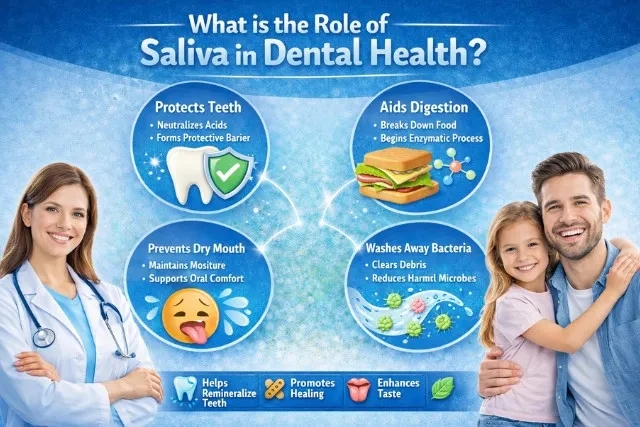
Understanding what is the role of saliva in dental health, it is necessary to understand the importance of saliva in dental health. Saliva is frequently underestimated. Saliva performs an important duty by protecting the mouth against tooth decay and providing comfort by preventing infections in the mouth. This becomes even more important during recovery situations, such as wait to exercise after tooth extraction, where proper oral conditions directly impact healing.
Saliva’s function in dental health goes well beyond providing moisture. Saliva is the body’s natural defence system, because it helps to neutralise acids, flush out food debris from the mouth, and promotes the repair of enamel on teeth. Without enough saliva, no matter how good your oral hygiene routine is, it is unlikely to work very well at all.
Understanding What Is the Role of Saliva in Dental Health
The answer to what is the role of saliva in dental health, the salivary glands provide salivary sustenance as part of their job to promote oral health. The saliva produced by the salivary glands is then mixed with food and beverages consumed by the person, bathing or covering both their teeth and soft tissues (gums and tongue). Maintaining these tissues is essential, especially when dealing with dental conditions like tooth infection that can go to your brain, where oral bacteria can become dangerous. A good flow rate of saliva can keep the mouth comfortable, prevent cavities and/or gum infections from forming.
Accordingly, saliva serves not only to sustain a healthy environment in the mouth but also to help create balance within the mouth, prevent the growth of pathogens in the mouth, break down food during swallowing, and to provide structure to the teeth.
Role of Saliva in Dental Health for Preventing Cavities
One major role of saliva in dental health is preventing tooth decay. Bacteria create acid from food which erodes the dental enamel after you eat.The acids produced by your bacteria in your mouth have been neutralized by your own saliva so that your teeth won’t erode away from acid.
In addition to neutralizing the acidity produced by bacteria, saliva washes away food particles from your mouth after you eat, so they won’t feed the bacteria. When the flow of saliva decreases, the amount of plaque increases, which significantly increases the risk of developing cavities and causing enamel wear.
Role of Saliva in Dental Health and Enamel Repair
Tooth decay is one of the primary functions of saliva when it relates to maintaining healthy teeth. Following ingestion, bacteria will generate an acid that softens the structure of teeth. This process occurs as a result of acid formation from bacteria creating a pH imbalance in the mouth where the concentration of these harmful acids exceeds the ability of saliva to neutralize these acids.
Additionally, saliva aids in removing residue from food that snagged on the surface of the teeth prior to eating, which would otherwise give the bacteria a place to thrive. If you produce less saliva, plaque will accumulate much faster and the likelihood of developing cavities will increase as well as the likelihood of having your enamel eroded. This can eventually lead to damage requiring treatment, such as repairing a chipped tooth cost.
Role of Saliva in Dental Health for Gum Protection
The health and integrity of the gums depend on the amount of saliva produced. Saliva buffers the gum tissue and protects it, as well as the adjacent structures, from damaging oral bacteria and the adhesion of those bacteria to the tissue. In addition, saliva can decrease the amount of inflammation found in the oral cavity. Lastly, saliva provides a natural protective barrier for any wounds within the oral cavity.
If there is a decrease in production of saliva, then there is an increased likelihood of developing bacterial infections, bleeding gums, and periodontal disease. In such cases, people often seek immediate care, such as can i go to urgent care for tooth pain.
Role of Saliva in Dental Health and Digestion
The first part of the digestion process begins with chewing food. Enzymes in saliva help to break down food prior to entering the stomach to begin breaking down the nutrients so that our bodies can absorb them for energy, which both help to limit the production of bacteria in our mouths.
This process of digestion also indirectly helps with dental health; because it reduces the amount of acid-forming bacteria in the mouth that lead to tooth decay.
Key Functions of Saliva in Dental Health
| Function of Saliva | How It Helps Dental Health |
| Acid Neutralization | Prevents enamel erosion |
| Enamel Remineralization | Strengthens teeth naturally |
| Bacterial Control | Reduces plaque formation |
| Lubrication | Prevents mouth sores |
| Digestive Support | Limits harmful bacteria |
What Happens When Saliva Production Is Low?
Low saliva production (often referred to as dry mouth) impacts a salt’s (saliva) ability to serve its purpose as it relates to helping you keep your teeth healthy. Some of the most common reasons people experience low saliva production included: dehydration, medications, stress, and other medical problems.
Symptoms can include bad breath, tooth sensitivity, increased cavities, and irritation of gums. It is very important to control saliva production over the long run in order to maintain good oral health. According to American Dental Association, dry mouth significantly increases the risk of cavities and gum disease.
How to Support the Role of Saliva in Dental Health Naturally
Simple habits can improve saliva production:
- Drink water regularly
- Chew sugar-free gum
- Eat fibrous fruits and vegetables
- Avoid excessive caffeine and alcohol
- Maintain regular dental checkups
These steps help saliva perform its protective role more effectively.
Conclusion
So, what is the role of saliva in dental health? You now recognize the important part that saliva plays in maintaining healthy teeth and gums and protecting them from dental issues.
The information gained about saliva’s role in maintaining gum and tooth health will be beneficial to you for the foreseeable future , which will help to prevent further damage and decay to both your gums and teeth.
You might also be interested in understanding treatment options and pricing, such as how much does it cost to fix a chipped tooth, to better manage dental care decisions.
Frequently Asked Questions (FAQs)
1. What is the role of saliva in dental health?
Saliva protects teeth by neutralizing acids, preventing decay, supporting enamel repair, and controlling bacteria.
2. How does saliva prevent cavities?
Saliva washes away food particles and neutralizes acids that weaken enamel.
3. Can low saliva cause dental problems?
Yes. Reduced saliva increases the risk of cavities, gum disease, and bad breath.
4. How can I increase saliva naturally?
Staying hydrated, chewing sugar-free gum, and eating crunchy foods can help stimulate saliva.
5. Is dry mouth dangerous for teeth?
Dry mouth can lead to faster enamel damage and higher bacterial growth.
Disclaimer:
This article is for informational purposes only and does not constitute medical advice. Always consult a qualified dentist or healthcare professional for an accurate diagnosis and personalized treatment plan.

