

Written by the HealthWealthCare Content Team | Reviewed by Hritik Banga, Healthcare Content Expert | Last updated: November 2026
Quick Answer
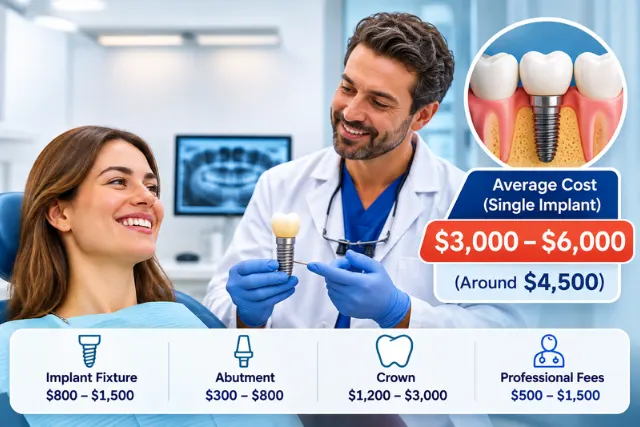
If you’re wondering how much do dental implants cost in the USA, a single dental implant typically costs around $4,500, with prices generally ranging from $3,000 to $6,000. This amount usually includes the implant fixture, abutment, crown, and professional fees. The final cost depends on your location, dentist’s experience, implant materials, and whether you need additional procedures such as bone grafting, a sinus lift, or tooth extraction. Dental insurance may cover part of the treatment, while financing plans and dental schools can offer more affordable options.
I get asked about implant costs constantly, and honestly, the answers people find online are all over the place. Some websites quote $1,000 implants (which would be a red flag), while others mention $10,000+ as the standard. The truth sits somewhere in the middle, but understanding what actually drives that price matters before you commit.
Understanding the factors that influence dental implants cost in the USA can help you avoid unrealistic price expectations and make a more informed decision about your treatment.
I’ve researched actual dental implant pricing across different US regions, talked to what dentists charge, and dug into insurance coverage patterns. Here’s what a realistic picture looks like.
Dental Implant Cost Breakdown: What Are You Paying For?
Your $3,000 to $6,000 implant cost isn’t one single charge. It’s actually several components bundled together. Understanding what you’re paying for helps you evaluate whether prices are reasonable. A dental implant system typically consists of an implant body and an abutment, which supports the artificial tooth. You can learn more about how dental implants work, their components, benefits, and potential risks in this FDA guide.
When evaluating dental implants cost in the USA, it is important to understand which services are included in the quoted price. Some dental clinics provide a complete treatment package, while others charge separately for the implant fixture, abutment, crown, and professional fees.
Dental Implant Fixture Cost (Titanium Screw)
This is the actual implant that goes into your jaw. It’s a titanium post engineered to fuse with your bone.
Cost: $800 to $1,500.
The fixture itself isn’t where pricing varies much. Most quality implants (Straumann, Nobel Biocare, Zimmer, or other name brands) are similar in cost. Budget implant brands exist for less, but experienced dentists typically stick with proven manufacturers.
Dental Implant Abutment Cost (Connector)
The abutment sits on top of the implant screw and connects it to your crown. It’s what holds everything together.
Cost: $300 to $800.
Some abutments are standard (comes with the implant), while others are custom-made to fit your specific jaw angle and tooth position. Custom abutments cost more but fit better.
Dental Crown Cost for Implants (Artificial Tooth)
This is the visible tooth. It’s not cheap because it needs to look natural, bite correctly, and last 15+ years.
Cost: $1,200 to $3,000.
Crown cost depends on material. Porcelain fused to metal runs $1,200 to $1,800. All-ceramic (more natural looking) runs $1,500 to $2,500. Full zirconia (strongest) runs $1,800 to $3,000.
Dental Implant Surgery and Professional Fees
The surgeon’s or prosthodontist’s time makes up a significant portion. This includes the surgery, implant placement, and coordination.
Cost: $500 to $1,500.
An oral surgeon typically charges more than a general dentist. A prosthodontist (implant specialist) charges even more but often delivers better results.
Additional Dental Implant Procedures and Their Costs
Not everyone needs these, but they affect your total cost:
Bone Grafting: If your jawbone is too thin or damaged, you need bone grafted before implant placement.
Cost: $800 to $2,500.
Sinus Lift: If the implant goes in your upper jaw near your sinuses, they might need to be lifted to make room.
Cost: $1,500 to $3,000.
Tooth Extraction: If the damaged tooth is still there, it needs to be removed first. However, not every damaged tooth needs to be extracted and replaced with an implant. Depending on the extent of the damage, other treatments may be possible. Learn more about how much it costs to fix a chipped tooth.
Cost: $100 to $400.
Imaging (CT Scan/3D X-ray): Advanced imaging helps surgeons plan placement.
Cost: $300 to $800.
Average Dental Implant Costs by Region in the USA
Prices depend on many factors, including: Cost of living in the area, How many other dentists are practicing there, the number of competing dental offices, and Dental school locations in the area. Additionally, prices can be reasonably diverse from one local to another.
- North East (New York, Massachusetts, Connecticut): $5,000 to $7,000 average.
- West Coast (California, Washington, Oregon): $4,500 to $6,500 average.
- South East (Florida, Georgia, Texas): $3,500 to $5,000 average.
- Mountain West (Colorado, Utah, Arizona): $3,500 to $5,000 average.
- Midwest (Illinois, Ohio, Michigan): $3,500 to $5,000 average. Remember this depends where in the US you are, your particular dentist might be quite different from the averages above.
- An implant super-specialist in a very rural part of Montana might be $4,500.
When comparing dental implant cost in the USA, remember that regional averages are only estimates. The actual amount you pay may differ based on the dental clinic, the complexity of your procedure, and the materials used. Always request an itemized treatment estimate so you can understand what is included in the quoted price.
Dental Implant Cost: General Dentist vs. Specialist
Who places your implant significantly affects cost.
General Dentist: $3,000 to $4,500 per implant. They’ve received implant training but don’t specialize exclusively in implants. Success rate depends on their specific experience.
Prosthodontist (Implant Specialist): $4,000 to $6,000 per implant. They’ve completed 2-3 years additional training after dental school focusing specifically on implants and complex cases. Higher success rates, better aesthetics, handles complicated cases better.
Oral Surgeon: $3,500 to $5,500 per implant. They specialize in surgical procedures and bone grafting. Often works with a prosthodontist for the crown phase.
The higher cost from a specialist isn’t just inflation. It reflects better outcomes, fewer complications, and superior aesthetics. If complications arise, a specialist typically handles them better than a general dentist would. Over the 20-year implant lifespan, investing in a specialist often costs less when you factor in fewer replacements and revisions.
Does Dental Insurance Cover Dental Implants?
Here’s where the realities often clash with expectations.
Traditional Dental Insurance: Most dental plans treat implants as cosmetic and cover nothing. There may be rare plans that pay 20-50% of the implant cost as part of a major restorative, but this is uncommon. Yearly maximums ($1,000-$1,500/year is the typical range) rarely cover the entire cost of an implant.
Dental insurance can also affect the cost of routine dental care, although coverage varies by plan. If you need to pay out of pocket, see our guide to dental cleaning without insurance to understand the potential expenses.
Medicare: Original Medicare does not cover dental, including implants. Some Medicare advantage plans offer varying degrees of dental coverage, but implants are not typically a covered benefit.
Medicaid: Medicaid policies vary widely from state to state. Some states cover implant costs in certain situations (such as complete denture patients). Most states do not cover elective implants.
Employer Plans: Large employers often have group plans that cover implants at a higher rate than standard plans. Review your individual plan language if you are considering implants. Some plans cover 20% of implants. Others include them as exclusions.
Before scheduling treatment, ask your insurance provider whether dental implants are covered under your plan. Check annual coverage limits, waiting periods, exclusions, and whether related procedures such as extractions or bone grafting are eligible for reimbursement. This can help you estimate your actual out-of-pocket dental implant cost.
Dental Schools: University dental schools often treat implants at 40-60% of normal. An implant that normally costs $4,500, for example, will only cost $1,800 to $2,700.
The trade-off is that treatment will take longer because of the nature of the treatment with dental students. Quality is very good but appointment times are much slower.
The realistic approach: Assume you’re paying the full cost out of pocket. If your insurance covers part of it, consider that a bonus.
Dental Implant Financing Options in the USA
$4,500 is a lot of money upfront. Here’s how people actually pay for it.
Payment Plans Through Dentist: Many offices offer 0% interest plans through CareCredit or SynchronyBank, allowing you to pay over 6-24 months. Monthly payments on a $4,500 implant typically run $200-$375.
Dental Discount Plans: Companies like Dental Plans or SparklingSmile offer discounted rates at participating dentists. Not insurance, but discounts of 10-20%. Cost: $80-$150 annually.
Dental Loans: Personal loans through Upstart, LendingClub, or your bank can fund implants. Interest rates run 6-36% depending on credit. Monthly payments vary.
Healthcare Credit Cards: CareCredit is the most common. Offers 0% interest if paid in full within the promotional period (6-24 months). After that, interest kicks in at 16-26%. Only use if you can pay within the promotional window.
Saving Over Time: If you’re not rushed, saving $200-$300 monthly means affording a full implant in 12-18 months without borrowing.
You can also explore whether your HSA funds can help pay for eligible dental treatments. Read more about using a health savings account for dental expenses before deciding how to finance your treatment. A payment plan with a low monthly installment may still cost more overall if it carries a high interest rate or extended repayment period.
Dental Tourism: Some people travel to Mexico, Costa Rica, or other countries for implants at 40-60% of US costs. Quality varies widely. If complications arise, handling them with a foreign provider is complex. Most dentists don’t recommend it.
How Much Do Multiple Dental Implants Cost?
If you need more than one implant, costs don’t simply multiply. You often get discounts for multiple implants.
Two implants: Often $7,500 to $10,000 total (not $9,000), roughly 16-20% cheaper than two single implants.
Full-mouth implants (8-12 implants): $30,000 to $70,000 depending on complexity. This is typically cheaper per implant than single implants because of surgical efficiency.
Implant-supported denture: 4 implants supporting a full denture might cost $15,000 to $25,000. Cheaper than individual implants for multiple missing teeth.
Ask your dentist about multi-implant pricing. You might save several thousand dollars over single procedures.
Dental Implant Pricing: Red Flags to Watch For
Some prices are genuinely too good to be true.
Implants under $1,500: Huge red flag. Either they’re using budget brands with lower success rates, or they’re cutting corners on the process. Real implants cost money.
Fixed prices with no consultation: Every mouth is different. Bone quality, sinus position, and tooth location affect cost. Anyone quoting a price without examining you is guessing.
Dentist discourages specialist consultation: A confident dentist welcomes second opinions. If yours discourages it, that’s suspicious.
No mention of warranty or guarantees: Quality dentists back their work. They offer 5-10 year warranties on crowns and stand behind implant success.
Pressure to book immediately: Legitimate offices let you think about treatment. High-pressure sales tactics suggest they’re more interested in revenue than outcomes.
Dental Implant Cost: Key Takeaways
- Single implant cost: $3,000 to $6,000 average, with $4,500 being typical in most US regions
- Cost breakdown: Fixture ($800-$1,500), abutment ($300-$800), crown ($1,200-$3,000), professional fees ($500-$1,500)
- Regional variation: Northeast/West Coast more expensive than Southeast/Midwest
- Specialist vs. general dentist: Specialists cost more but deliver better long-term outcomes
- Insurance coverage: Assume 0%. Some plans cover 20-50%, but rare
- Financing: 0% payment plans make large upfront costs manageable
- Multiple implants: Pricing discounts apply when placing more than one
- Red flags: Prices under $1,500, no consultation, pressure tactics, no warranties
Dental Implants vs. Bridges vs. Dentures: Cost Comparison
- Single Implant: $3,000-$6,000 upfront, lasts 15-25 years, ~$150-$300/year in maintenance
- Bridge: $2,000-$4,000 upfront, lasts 7-10 years, replacement costs $2,000-$4,000 each time
- Denture: $1,500-$3,000 upfront, lasts 5-8 years, requires frequent adjustments ($200-$500/year), multiple replacements
Dental implants can provide a long-term tooth replacement solution when properly maintained. Their lifespan depends on factors such as oral hygiene, bone health, and regular dental care. Learn more about how long dental implants last and what affects their durability.
Conclusion
Understanding how much do dental implants cost in the USA can help you make a more informed decision about replacing missing teeth. A single dental implant typically costs around $4,500, although the final price can range from $3,000 to $6,000 depending on your location, dentist’s experience, materials, and additional treatment requirements.
Before choosing a dental provider, compare multiple treatment estimates and ask what the quoted price includes. Check your dental insurance benefits, explore financing options, and discuss the expected treatment timeline with a qualified dentist.
Although dental implants require a higher initial investment than some alternatives, they can offer long-term tooth replacement benefits when properly planned and maintained. Choose a qualified dental professional and prioritize treatment quality, safety, and your individual oral health needs over price alone.
Frequently Asked Questions
1. How Much Do Dental Implants Cost in the USA for One Tooth?
A single dental implant in the USA typically costs between $3,000 and $6,000, with an average price of approximately $4,500. The final amount depends on the implant fixture, abutment, crown, dentist’s fees, location, and any additional procedures required.
2. How Much Do Dental Implants Cost Without Insurance?
Without dental insurance, a single implant generally costs around $3,000 to $6,000 based on the estimates discussed in this article. Additional procedures, such as bone grafting or a sinus lift, may increase the total expense.
3. What Is the Cheapest Way to Get Dental Implants in the USA?
You can explore dental school clinics, compare estimates from multiple qualified dentists, and check available financing or dental discount options. However, consider the provider’s qualifications, treatment quality, and follow-up care rather than choosing a clinic based on the lowest price alone.
4. Are Dental Implants Worth the Cost?
Dental implants can be a worthwhile long-term tooth replacement option for suitable patients. They offer a fixed replacement for missing teeth and can last many years with proper care. A dentist can help determine whether implants are appropriate for your oral health and budget.
5. Why is there such a big price range ($3,000 to $6,000)?
Location, dentist experience, implant brand, crown material, and whether you need additional procedures like bone grafts all affect price. A simple case with a general dentist in a rural area costs less than a complex case with a prosthodontist in a major city.
6. Is traveling out of state worth it to save money on implants?
Traveling might save $500-$1,000, but factor in travel costs, time away, and follow-up appointments. For a single implant, savings rarely justify the hassle. For full-mouth cases, sometimes it makes sense. Most dentists won’t take patients they can’t follow long-term.
7. Will my dental insurance cover any of the implant cost?
Most standard plans cover 0-20% of implant costs. Check your specific plan. Preventive care (cleaning, exams) is typically covered at 100%, but the implant itself usually isn’t.
8. Do all implant brands cost the same?
Quality brands (Straumann, Nobel, Zimmer, Astra) are similar in price. Budget brands cost less but have lower success rates. Your dentist typically includes their preferred brand in quoted prices.
9. Are financing plans worth it, or should I save the money first?
If you’re looking at 18+ months of saving and you have a tooth that needs replacing now, financing at 0% interest makes sense. If you can save the money in 6 months, waiting probably saves stress.
10. What’s included in the $4,500 average cost?
The implant fixture, abutment, crown, and professional fees. Additional procedures (bone graft, sinus lift, extractions, imaging) cost extra if needed.
11. Can I get a cheaper implant by having a general dentist do it instead of a specialist?
You might save $500-$1,000, but success rates and outcomes typically suffer. Specialists handle complications better and create better-looking results. The savings often disappear if revision work becomes necessary.
12. Are dental school implants really that much cheaper, and are they safe?
Yes, 40-60% cheaper. Yes, they’re safe. Dental students work under faculty supervision. The tradeoff: appointments take 2-3 times longer, and you might need multiple visits. Quality is generally good, but expect slower service.
Disclaimer
This article is intended for informational and educational purposes only. The dental implant costs mentioned are estimates based on the pricing information discussed in this article and may vary depending on your location, dental provider, treatment complexity, and individual oral health needs. Insurance coverage, financing options, and treatment costs also differ between providers and plans. Consult a qualified dental professional for a personalized treatment plan and accurate cost estimate before making any dental care decisions.