

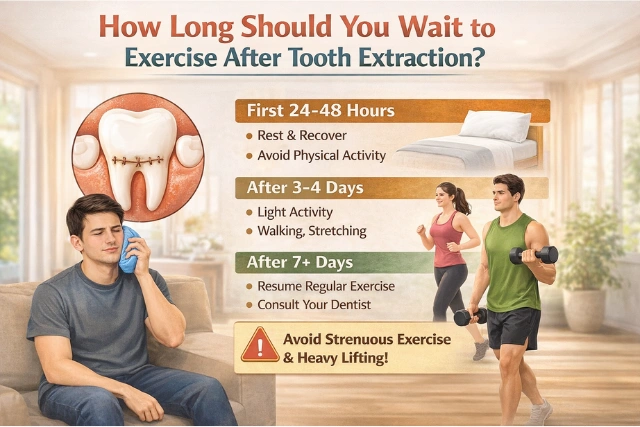
Knowing how long should you wait to exercise after tooth extraction is important if you want proper healing and avoid painful complications. Many people feel fine after a dental extraction and think returning to exercise right away is harmless. However, your body needs time to recover, even if the procedure felt simple. Proper aftercare is essential, especially when combined with habits explained in role of saliva in dental health, which directly support healing after dental procedures.
Exercise increases blood flow and pressure, which can disturb the clot forming in the extraction site. This clot protects the wound and allows healing to begin. Removing it too early can slow recovery and lead to problems like dry socket.
How Long Should You Wait to Exercise After Tooth Extraction?
The general rule is to wait at least 24 to 48 hours before exercising after a tooth extraction. This timeframe allows the blood clot to stabilize and reduces the risk of bleeding or dry socket.
However, the exact answer to how long should i wait to exercise after tooth extraction depends on several factors, including:
- Type of extraction (simple or surgical)
- Your overall health
- Intensity of the workout
- Dentist’s post-care instructions
Recommended Exercise Timeline
| Time After Extraction | What You Should Do |
| First 24 hours | Complete rest, no exercise |
| 24–48 hours | Light walking only |
| 3–5 days | Gentle stretching, low-impact activities |
| After 7 days | Gradual return to normal workouts |
Always prioritize healing over fitness during the first week.
How Long Should I Wait to Exercise After Tooth Extraction (Simple Extraction)
For a simple extraction, most people can resume light exercise after 48 hours. Activities like walking or gentle yoga are usually safe if there is no pain or bleeding.
Avoid anything that:
- Raises heart rate significantly
- Requires bending or lifting
- Causes jaw clenching
If discomfort returns, stop immediately.
How Long to Wait to Exercise After Tooth Extraction (Surgical or Wisdom Teeth)
If you had a surgical extraction or wisdom tooth removal, recovery takes longer. In this case, how long should you wait to exercise after tooth extraction may extend to 5–7 days or more. You can also improve recovery outcomes by understanding guidelines like how long does wisdom teeth pain last, which helps you track normal healing.
High-impact workouts too soon can:
- Increase swelling
- Cause bleeding
- Dislodge stitches
- Delay healing
Always follow your dentist or oral surgeon’s instructions for these cases.
Why Exercising Too Soon Can Be Risky
Exercising increases blood pressure, which can reopen the wound. This can result in:
- Bleeding at the extraction site
- Pain and throbbing
- Dry socket (loss of protective clot)
- Infection risk
Dry socket is especially painful and can delay healing by several weeks. Maintaining proper habits—such as those explained in can i use a straw after wisdom teeth removal—can help prevent complications.
Safe Exercises During Recovery
If you’re eager to move, try low-impact options once approved:
- Short walks
- Gentle stretching
- Light yoga (no inversions)
- Breathing exercises
Avoid:
- Running
- Weightlifting
- HIIT workouts
- Contact sports
Signs You’re Not Ready to Exercise Yet
Stop exercising and rest if you notice:
- Bleeding from the socket
- Increased pain
- Swelling returning
- Bad taste or odor in mouth
- Dizziness or fatigue
These signs mean your body needs more time.
Tips for a Faster, Safer Recovery
- Stay hydrated
- Eat soft, nutritious foods
- Avoid smoking or alcohol
- Keep head elevated while resting
- Follow dentist instructions carefully and maintain oral hygiene, especially if you’re also dealing with related issues like what does a chipped tooth look like, which require careful dental attention.
Healing properly now prevents complications later.
Conclusion
Understanding how long should you wait to exercise after tooth extraction helps protect your health and ensures smooth healing. While taking a short break from workouts can feel frustrating, it’s a small price to pay for avoiding serious dental issues.
Guidance from NHS (National Health Service) also recommends limiting physical activity after oral surgery. Listen to your body, follow professional advice, and return to exercise gradually. Your mouth—and your future workouts—will thank you.
Frequently Asked Questions (FAQs)
1. How long should you wait to exercise after tooth extraction if there is no pain?
Even without pain, wait at least 24–48 hours. Pain is not the only indicator of healing.
2. Can I exercise 24 hours after tooth extraction?
Light walking may be okay after 24 hours, but intense workouts should be avoided.
3. How long should I wait to exercise after tooth extraction with stitches?
Wait 5–7 days or until your dentist confirms it’s safe.
4. Is it okay to do yoga after tooth extraction?
Yes, but only gentle poses. Avoid inversions or positions that increase blood pressure in the head.
5. What happens if I exercise too soon after tooth extraction?
You may experience bleeding, pain, or dry socket, which can delay healing significantly.
Disclaimer:
This article is for informational purposes only and does not constitute medical advice. Always consult a qualified dentist or healthcare professional for an accurate diagnosis and personalized treatment plan.

