

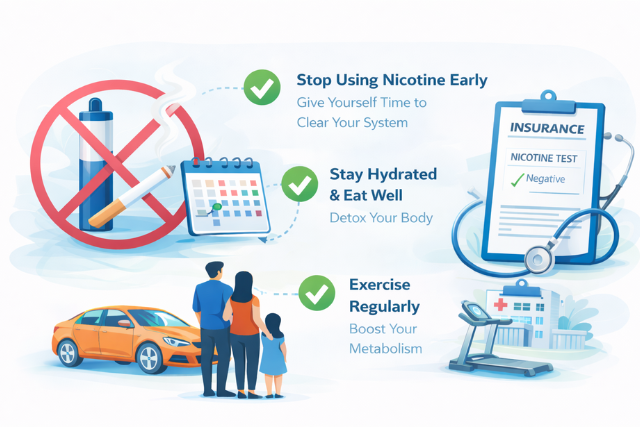
By understanding how to pass a nicotine test for health insurance, you will potentially avoid paying more for your insurance than necessary and can help prevent delays in receiving your policy approval. Nicotine screenings are utilized by insurance companies to determine qualification for coverage and risk classification based on your tobacco and/or nicotine usage history.
Many individuals worry about whether they could pass these initial tests. Nicotine can remain in your system longer than you expect, and being prepared for the test and understanding the testing timeline will give you the best chance of approaching the test with an amount of confidence that allows you to succeed.
Understanding how to pass a nicotine test for health insurance
To assess an individual’s potential risk, health insurance companies perform nicotine tests. Since nicotine users often suffer higher claim costs in the future due to greater incidences of heart disease, cancer, and respiratory problems, they represent a higher risk to the insurer than non-nicotine users.
Cotinine is the chemical created when the body metabolizes nicotine and is commonly tested for by health insurance companies. Cotinine is detectable in the body for an extended period of time after the discontinuation of nicotine use, making it a useful and reliable way to indicate tobacco or nicotine use.
How to Pass a Nicotine Test for Health Insurance Legitimately
Abstaining from all forms of nicotine use before your screening is the most effective way to avoid being positive on your nicotine drug test. The various forms of nicotine use include cigars, vaping cigarettes, chewing or smoking the tobacco product, using nicotine patches or pickets, and in some cases, some herbal products are also found helpful for nicotine use.
The time period required for a non-smoker’s application will vary by each individual insurance provider based on their own established underwriting guidelines. Each insurance provider has a timeframe beyond which they will generally not accept tobacco usage. Tobacco users should be aware of this before applying to an insurance carrier that provides coverage to non-smokers.
How Long Nicotine Stays in Your System
The time nicotine and cotinine stay in your body depends on your usage history and metabolism.
| Nicotine Test Type | What It Detects | Detection Time |
| Urine Test | Cotinine | 3–7 days |
| Blood Test | Cotinine | 7–10 days |
| Saliva Test | Cotinine | 1–4 days |
| Hair Test | Nicotine history | Up to 90 days |
If you are serious about how to pass a nicotine test for health insurance, quitting early gives your body enough time to clear these markers naturally.
Types of Nicotine Tests Used by Insurers
Urine Nicotine Test
The urine nicotine test is the most frequently performed test, so it is low-cost, accurate and has been used by many insurance companies.
Blood Nicotine Test
A blood nicotine test is more accurate than a urine test, and may be used to evaluate more valuable insurance policies.
Saliva Nicotine Test
The saliva nicotine test is less of an invasive procedure and may also be used at home for medical examinations.
Hair Follicle Test
Insurance companies can perform a hair follicle nicotine test on a potential insured individual.
Nicotine Products That Can Affect Test Results
Most applicants don’t even know that they’re not going to pass their tests because of the products they take before taking those tests. So, for best results, do not use any of the following products prior to taking your test:
- Cigarettes or cigars
- E-Cigarettes/Vaping products
- Nicotine gum and/or lozenges
- Nicotine patches
- Chewing tobacco
- Hookah/Flavoured tobacco
“Social” smoking can affect the test result.
How to Prepare Before a Nicotine Test
Preparation plays a big role when thinking about how to pass a nicotine test for health insurance.
- Stop nicotine use as early as possible
- Drink adequate water daily
- Maintain a healthy diet
- Get proper sleep
- Be honest on insurance forms
Hydration supports normal detox processes but does not instantly remove cotinine.
Can Second hand Smoke Cause a Failed Test?
Typically, being exposed to (secondhand) smoke will not yield a positive result on a drug screening. Heavy exposure to secondhand smoke over long periods of time may result in cotinine levels (the product of nicotine).
Before having a drug screen, notify your insurance carrier of any exposure to secondhand smoke at your place of residence or employment.
What Happens If You Fail a Nicotine Test?
Failing a nicotine test does not mean your policy is denied. Instead:
- You may be classified as a smoker
- Premiums may be higher
- Re-testing may be allowed after a waiting period
Some insurers allow reclassification after 6–12 months of being nicotine-free.
Should You Be Honest About Nicotine Use?
Yes. Always answer application questions truthfully. Providing false information can lead to policy cancellation or claim rejection later.
Being honest and planning ahead is a smarter approach to how to pass a nicotine test for health insurance.
Conclusion
You must understand how to pass a nicotine test for health insurance and what your plan of action will be to help yourself quit nicotine products when preparing for your health insurance nicotine testing. The best way to prepare for your nicotine testing is to stop all forms of tobacco immediately (including chewing tobacco), and do not consume any products that contain nicotine after this date.
Additionally, it’s very important to be forthright and forthcoming with your insurer regarding your prior use of nicotine.If you prepare in this manner, you will be more likely to get approved for insurance, you will be promoting your long-term health and you can save money.
Frequently Asked Questions (FAQs)
1. Does vaping count as nicotine use for insurance?
Yes. Vaping products with nicotine are treated the same as smoking.
2. Can nicotine gum affect my insurance test?
Yes. Nicotine replacement products still produce cotinine.
3. Will drinking water help pass a nicotine test?
Water supports detox but cannot instantly remove nicotine markers.
4. Can I retake the nicotine test for health insurance?
Many insurers allow retesting after a nicotine-free period.
5. Is there a difference between smoker and tobacco user?
Some insurers include all nicotine use under “tobacco user,” not just smoking.

