

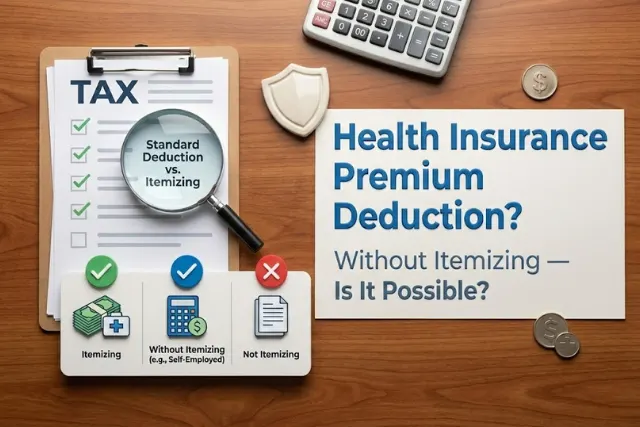
Can you deduct health insurance premiums without itemizing is a question many taxpayers ask, as this might help them reduce their tax burden. Statistically the cost of healthcare has risen so high within recent years that understanding how this tax benefit applies to taxpayers is becoming increasingly important.
Most medical expenses must be reported through itemized deductions. However; there are currently circumstances where a taxpayer may be able to deduct their health insurance premiums without needing to itemize them.
This guide will help determine who qualifies; explain how it works and highlight some important regulations regarding this deduction.
You might be interested in knowing about can you have 2 health insurance plans? We have made an informative article on the topic as well.
How Health Insurance Premium Deductions Work
In addition to allowing for the deduction of Medical Expenses, the IRS allows a limited number of taxpayers to take a direct deduction off their income for premiums paid. As a result, even when claiming the Standard Deduction, you could still obtain tax relief from Premiums paid.
Can You Deduct Health Insurance Premiums Without Itemizing on Your Taxes?
Yes, you can deduct health insurance premiums without itemizing,however, there are limitations based on income type and premium payment method. The greatest advantage of this provision is available to the self-employed.
Employment status and prior employment typically have several restrictions attached; nonetheless, employees and retirees may be able to take advantage of the “Indirect” taxation benefit of pre-tax payroll deductions.
Eligibility Criteria for Non-Itemized Deductions
Not everyone qualifies for this tax benefit. The IRS has specific conditions that determine eligibility.
Who May Qualify
- Self-employed individuals
- Freelancers and gig workers
- Small business owners
- S-corporation shareholders
If you fall into one of these categories, you may deduct eligible premiums without itemizing.
Health Insurance Write-Off for Self-Employed Taxpayers
Self-employed individuals can claim an above-the-line deduction for health insurance premiums. This allows you to deduct premiums even if you use the standard deduction.
Requirements include:
- Net self-employment income
- No access to employer-sponsored health insurance
- Policy must cover you, your spouse, or dependents
This deduction applies to medical, dental, and long-term care insurance.
Tax Treatment of Employer Health Insurance Plans
Employees usually pay health insurance premiums through payroll deductions. Most employer-sponsored plans deduct premiums before taxes.
Because these premiums are already tax-free:
- You cannot deduct them again
- No itemization is required
- Tax savings are automatic
After-tax premiums may only be deductible if you itemize.
Medicare Premium Deduction Rules Explained
Medicare premiums can also qualify under certain circumstances.
- Self-employed individuals can deduct Medicare premiums without itemizing
- Retirees generally must itemize medical expenses
- Parts B, C, and D may be included
The key factor is whether the premiums are paid with after-tax income.
Standard Deduction vs Medical Expense Deduction
Choosing between the standard deduction and itemized deductions affects whether you can deduct health insurance premiums.
Deduction Comparison
| Deduction Method | Itemizing Needed | Best For |
| Self-employed insurance deduction | No | Freelancers & business owners |
| Employer pre-tax premiums | No | Salaried employees |
| Medical expense deduction | Yes | High medical costs |
| Medicare premium deduction | Sometimes | Retirees |
Errors That Can Disqualify Your Deduction
Taxpayers often make mistakes that result in denied deductions.
- Deducting pre-tax premiums again
- Claiming the deduction without qualifying income
- Overlooking employer coverage eligibility
- Mixing standard and itemized deductions incorrectly
Avoiding these issues can protect you from IRS penalties.
Steps to Claim the Deduction Successfully
When you want to claim deductions for health insurance premiums, without needing any kind of Itemized deductions, it can be relatively easy if you know what steps to take and follow the requirements. You can avoid filing mistakes by completing a couple of minor checks before filing.
1. Confirm your qualification status
Confirm that you are either self-employed, a freelancer, or operating a small business. You need to have earned income and cannot qualify for another employer’s sponsored health insurance.
2. Verify Payment Methods For Your Premiums
Only premium payments made with after-tax funds will count towards your deduction (premium payments made through a use of an employer’s pre-tax payroll deduction will not count for purposes of this deduction).
3. Maintain Proof of Payment for All Premiums
Retain documentation of your payment for your insurance premiums (this may include receipts, bank statements or invoices) clearly showing total premium payments made during the calendar year.
4. Include Premiums For Family Members, If Applicable
If your health plan includes coverage for your spouse or dependents, those premiums may also qualify to be included in your deduction, provided that you also qualify for the deduction.
5. Report the Deduction In The Proper Manner
Report the amount of your deduction on schedule 1 of IRS Form 1040 (Self-employed health insurance). This is where to report your health insurance premium deduction based on your self-employment, allowing you to claim the deduction without needing to itemize.
6. Verify Second Time Before Filing
Verify that your health insurance premium deduction does not exceed your self-employment income.
Conclusion
Understanding can you deduct health insurance premiums without itemizing will allow you to better plan your taxes. While most employees will take advantage of pre-tax payroll deductions, it is the self-employed who have the greatest chance of taking this deduction directly from their income.
By understanding the guidelines, you will not only save on taxes, but you will also avoid making expensive errors when filing taxes.
Frequently Asked Questions (FAQs)
1. Are spouse and dependent premiums included?
Yes, if you are eligible, premiums for family members can be deducted.
2. Do retirees qualify for non-itemized deductions?
Most retirees must itemize unless they have self-employment income.
3. Is it possible to claim health insurance premiums without itemizing them, if you have claimed the standard deduction?
Self-employed taxpayers are still able to claim health insurance premiums as tax deductions whether they take the Standard Deduction or not.
4. Are dental and vision insurance premiums included?
Yes. Most often dental and/or vision insurance premiums will also qualify for the same deduction as other health insurance premiums.
5. What if my business does not generate a profit?
When you have no net profit from self-employment, it is impossible for you to take the health insurance deduction for that year.

