

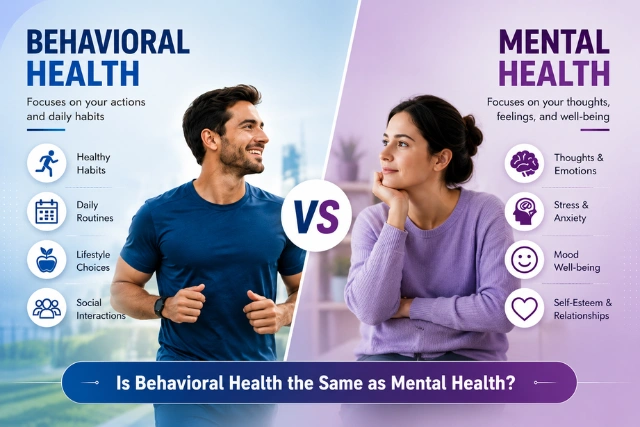
If you’ve ever searched online for “is behavioral health the same as mental health,” you’re not alone—many people ask the same question. Though people often use these two terms as if they are synonyms, behavioral health is slightly different from mental health. Knowing the distinction between these two terms will enable you to make better-informed decisions about your well-being or someone you care about.
Understanding the connection between mental wellness and daily habits is also important, which is why many people explore the psychology behind music and mental health. At Health Wealth Care, we believe that knowledge is power when it comes to taking control of your wellness.
Not sure where to begin with your mental & behavioral health needs?
Let Health Wealth Care lead you.
Is Behavioral Health the Same as Mental Health?
The short answer: no. In fact, mental health is a part of behavioral health, and behavioral health includes many more things.
All mental health is behavioral health, but not all behavioral health is mental health. Mental health falls under the larger category of behavioral health. Behavioral health covers how your thoughts, feelings, and behaviors influence your physical and emotional well-being and encompasses things such as substance use disorders, sleep behavior, eating behavior, etc.
Mental health is only concerned about emotional, psychological, and social well-being. How you think, feel, and how you relate to the people around you is what this field covers. Examples include disorders such as: depression, anxiety, bipolar disorders, etc.
| Feature | Mental Health | Behavioral Health |
| Scope | Emotional & psychological well-being | Broader, includes mental health + behaviors |
| Covers | Mental illness, mood disorders, anxiety | Substance abuse, eating, sleep, mental health conditions |
| Treated by | Psychiatrists, therapists, counselors | Behavioral health professionals (broader team) |
| Focus | Thoughts, emotions, relationships | How behaviors impact overall health |
| Example conditions | Depression, bipolar disorder, PTSD | Addiction, eating disorders, anxiety + lifestyle habits |
What Is Behavioral Health?
So, what is behavioral health? It’s a broad approach to health care that examines the link between your behaviors and your mental and physical well-being. Mental health is a part of behavioral health, along with:
- Substance use disorders
- Eating and activity patterns that impact health;
- Sleep behaviors and sleep disorders;
- Unsafe or impulsive behaviors;
- Stress-induced physical conditions.
Behavioral health services are designed to treat both the mind and the lifestyle patterns that impact it. A behavioral health professional might be a therapist, a substance use counselor, a case manager, or a psychiatrist, often working together as a team.
How behavioral health encompasses mental health
For example, someone experiencing both depression and a substance use disorder may find that each condition affects the other. Behavioral health treatment addresses both the mental health condition and the behaviors contributing to it.
What Is Mental Health?
It is defined by the CDC as a state of well-being in mental, psychological, and social aspects. It affects how we handle stress, interact with others, and make everyday decisions. Many people also wonder whether health insurance covers therapy when seeking professional support.
Examples of common mental disorders:
- Depression & anxiety disorders
- Bipolar disorder
- PTSD and related trauma disorders
- Schizophrenia & psychosis disorders
- OCD and other common behavioral health conditions
Mental health is one important component of behavioral health, which takes a broader view of overall wellness.
When is Mental Health Awareness Month?
What month is mental health awareness month? It’s May — every year in the USA. A great time to check in on your mental and behavioral health and reach out for support if you need it.
Behavioral Health vs Mental Health: Key Differences at a Glance
Here’s a simple way to remember the difference between mental health and behavioral health:
- Mental health = how you think and feel inside
- Behavioral health = how what you think and feel shows up in what you do
Both matter. And in most modern healthcare settings, behavioral and mental health care are treated together — because they’re deeply connected.
| Term | What it means | Example |
| Mental health vs behavioral health | Mental = subset; Behavioral = whole | Anxiety (mental) vs. anxiety + avoidance behaviors (behavioral) |
| Behavioral vs mental health care | Behavioral care is more comprehensive | Treating addiction + depression together |
| Mental and behavioral health | Often treated as one integrated system | Integrated care clinics, PHP programs |
What is PHP in mental health?
- PHP stands for Partial Hospitalization Program.
- It’s a structured, intensive level of behavioral and mental health care that’s more than outpatient therapy but less than a full inpatient stay.
- It’s often used for people dealing with serious mental health issues or substance use disorders who need more support without 24/7 hospitalization.
Ready to take the next step?
Whether it’s mental health or behavioral and mental health care you’re looking for: Health Wealth Care can point you in the right direction.
Why the Difference Between Behavioral Health and Mental Health Matters
You might wonder whether the distinction really matters. It can. This is because:
- Insurance benefits: A behavioral health specialist’s services are not always included in the same way that a mental health specialist’s services would be. This requires some knowledge of the appropriate jargon in order to decipher your benefits.
- Locating an appropriate service provider: Behavioral health providers may offer a broader range of services that address both mental health conditions and lifestyle-related concerns.
- Decreasing the sense of taboo: Certain individuals may view “behavioral health” as being less stigmatized than other types of nomenclature and may therefore feel less anxious in seeking the help of a provider.
- A more integrated service delivery: Integrated care models often combine mental health and behavioral health services to provide more comprehensive treatment.
How to Choose the Right Care: Behavioral Health or Mental Health Services?
If you’re still not clear, consider this approach to deciding which treatment is best for you, a friend, a family member, etc.:
Use mental health treatment services when:
- You primarily experience feelings, like depression, anxiety, rapid mood changes, trauma responses, etc.
- You have trouble with day-to-day life and your daily routine, but there are no mental health problems or substance abuse issues present.
- You are seeking individual therapy, medication evaluations, or a psychiatrist for medication management purposes.
- You already have a diagnosis of mental illness, such as depression or bipolar disorder.
Use behavioral health services when:
- Substance use disorder(s) are present, whether the person also has mental illness issues or not.
- Health has been negatively impacted due to behavioral issues, such as in eating disorders, sleeping disorders, etc.
- The individual has been diagnosed with an overlapping disorder, such as a mental health and substance abuse disorder.
- Outpatient treatment is not sufficient, and a higher level of care, such as Partial Hospitalization Programs (PHP), is required.
- The individual prefers treatment to be addressed by an entire group of providers or a team.
Essentially, if you’re not sure what course of treatment is best suited to your individual situation, consult a behavioral health professional, who will be able to look at your symptoms and guide you.
What Role Does Insurance Play in Mental Health vs. Behavioral Health debate?
One very practical reason why the Mental Health vs. Behavioral Health classification becomes significant is because of insurance. The Mental Health Parity and Addiction Equity Act (MHPAEA) makes it necessary for U.S. Insurance plans to cover mental health and substance use disorder treatment on par with medical and surgical treatments.
For example:
- PHP, IOP, residential treatment, and other services can often be categorized under ‘behavioral health benefits’.
- Your insurance plan might provide ‘behavioral health benefits’ as an umbrella term that includes mental health and substance use disorder services.
- Medical necessity must be established to appeal a denial of mental health or behavioral health services.
Before seeking services, you may want to ask your provider about insurance coverage and understand your plan’s deductible in health insurance.
Conclusion: You Need Both Mental & Behavioral Health
So, is behavioral health the same as mental health? Not exactly. Mental health is one part of behavioral health, while behavioral health also includes habits, actions, and lifestyle factors that influence overall well-being. Understanding the distinction can help you choose the right type of care, access appropriate services, and make informed decisions about your health.
What’s important-more than your definitions or vocabulary-is that you or someone you love finds effective treatment and support. Maybe a therapist, a PHP program that offers treatment for depression and drug abuse, or an entire behavioral health care team is needed. It’s out there, and it works.
Health Wealth Care wants to help you find it, understand it, and obtain it. If you’re exploring coverage options, you may also want to learn how long it takes to get health insurance.
Frequently Asked Questions (FAQs)
Are mental health and behavioral health the same?
No, mental health is an aspect of behavioral health. Behavioral health includes mental health as well as behaviors, such as substance abuse and diet and nutrition.
What is the biggest difference between mental health and behavioral health?
The difference between mental health and behavioral health is scope. Mental health disorders focus on mood, feelings, and the way the individual perceives the world (as feeling happy or sad, or anxious); behavioral health focuses on mental disorders plus behavior. Behavioral disorders include mental health and behaviors like eating, using drugs, etc.
What is a behavioral health professional?
They provide treatment and support for mental and behavioral health disorders, and a variety of professional backgrounds are represented, including psychiatrists, therapists, counselors, social workers, etc.
What is a PHP in mental health?
A partial hospitalization program, or PHP, that provides treatment for multiple hours per day, multiple days per week, that includes medicine management and life skills education.
When is Mental Health Awareness Month?
The month of May.
Can you be diagnosed with more than one mental/behavioral health disorder?
Yes, you can. They are called co-occurring conditions.
Is substance abuse behavioral health or mental health?
Behavioral health; however, it may coexist with mental health disorders.
Are they treated the same for insurance?
Generally yes. Laws and guidelines have been set for parity that require that mental health disorders be treated the same by health insurance plans as mental disorders and vice versa; however, it is always advisable to confirm this with your health insurance provider.
Is anxiety considered mental health or behavioral health?
Anxiety is primarily considered a mental health condition, but it also falls under the broader category of behavioral health because it can influence behaviors, relationships, and daily functioning.
Why do hospitals use the term behavioral health?
Many healthcare organizations use the term behavioral health because it covers a wider range of services, including mental health treatment, substance use disorder treatment, and programs that address health-related behaviors.
Reviewed by Health Researchers
This article was reviewed for accuracy using guidance from the CDC, SAMHSA, Mental Health America resources, and publicly available behavioral health and mental health educational materials available at the time of writing.