

Have you ever looked at a health insurance form and wondered “what does PPO mean in health insurance, and why does this keep popping up everywhere?” You’re definitely not alone if health insurance terms feel confusing at first. Many people don’t fully understand how their health insurance works, but that confusion can become expensive very quickly. If you’re still learning basic insurance terms, here’s a helpful guide on what a deductible means in health insurance and how it affects your costs.
A PPO stands for a Preferred Provider Organization and it is one of the most common health plans in the US, and understandably so. One reason PPO plans are so popular is the flexibility they give you when choosing doctors and specialists. However, it may not be suitable for all. Let’s see what the PPO stands for in health insurance, how it functions on a daily basis, and if it is a good model for your life, and your finances.
What Does PPO Mean in Health Insurance? The Full Picture
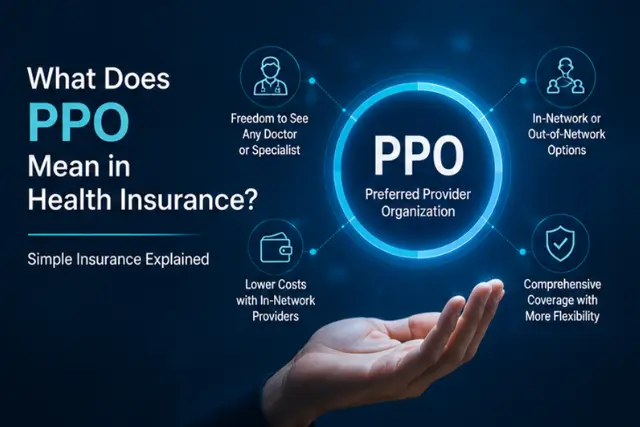
PPO stands for Preferred Provider Organization. It’s a type of health insurance plan that works with a network of doctors, hospitals, and specialists called the plan’s network who have agreed to provide medical care at pre-negotiated rates.
Here’s what makes a PPO special: unlike some other plan types, you’re never locked in. You can visit any doctor or specialist inside or outside the network without needing a referral to see a specialist. That kind of freedom is rare, and it’s exactly why PPOs are so widely loved, even though they tend to come with higher out-of-pocket costs and monthly premiums.
The simple version: A PPO plan lets you see any doctor you want, anytime but you’ll pay less when you stick to doctors inside the plan’s network. No gatekeeping. No mandatory referrals. Just flexibility. If you’re still learning common insurance terms, the official health insurance glossary from Healthcare.gov explains many important healthcare definitions in simple language.
What happens when you have a PPO?
- You may use any provider (in or out-of-network) without needing a prior approval from your insurance company
- The price will be lower for in-network providers since they negotiated the prices with your insurance company
- The expenses will still be covered for out-of-network providers, but you’ll need to pay more
- There’s no need to choose a PCP (primary care physician)
- You can schedule appointments with specialists directly without needing a referral first.
- Your deductible is paid first and then you’ll be paying coinsurance up until you reach your out-of-pocket limit
PPO Meaning in Health Insurance: Pros and Cons
Every health insurance plan comes with its own advantages and trade-offs. This is the good and the bad of a PPO health plan:
| PPO Advantages | PPO Disadvantages |
| See any doctor without a referral | PPOs typically have higher monthly premiums |
| Out-of-network care is still covered | Higher out-of-pocket costs than HMO plans |
| No need to choose a primary care physician | Deductibles tend to be larger |
| Great for people who travel frequently | More paperwork for out-of-network claims |
| Ideal if you have specialists you already trust | Can be confusing to compare in-network vs out costs |
| Wide access to network care nationwide | Not ideal if you want the lowest possible premium |
Warning: PPO premiums will normally be higher than plans that are HMO’s or EPO’s. If you’re feeling healthy and almost never see a doctor then a lower premium plan may actually save you more. Not sure which type of plan? Call us and we will help you compare plans.
PPO vs POS Health Insurance: What’s the Difference?
Good question and one that many have trouble with. Both PPOs and POSs have some level of out-of-network benefits, but they differ significantly in their approach. Take a look at this chart that compares the four types of plans:
| Feature | PPO | HMO | EPO | POS |
| Full name | Preferred Provider Org. | Health Maintenance Org. | Exclusive Provider Org. | Point of Service |
| See out-of-network? | Yes | No | No | With referral |
| Referral needed? | No | Yes | No | Yes |
| Choose a PCP? | No | Required | No | Required |
| Monthly premiums | Higher | Lower | Medium | Medium |
| Pocket costs | Higher | Lower | Medium | Medium |
| Flexibility | Highest | Lowest | Medium | Medium |
| Best for | Flexibility seekers | Budget-conscious | Mid-range needs | Balance of both |
HMO vs PPO – Which One Should You Pick?
The HMO plan (Health Maintenance Organization) is the biggest rival to the PPO. The easiest way to understand the difference is this: an HMO costs less each month but locks you into a tight network and requires referrals for everything. A PPO costs more but gives you total freedom.
| Situation | PPO or HMO Better? |
|---|---|
| Want specialist access without referrals | PPO |
| Lowest monthly premium | HMO |
| Frequent travelers | PPO |
| Rarely visit doctors | HMO |
| Need out-of-network coverage | PPO |
| Want predictable lower costs | HMO |
If you require a specific specialist, have some sort of chronic illness, or hate getting permission first to make appointments, a PPO plan will be a much better fit for your needs. For younger and healthier individuals trying to reduce monthly healthcare costs, an HMO or EPO plan may make more financial sense. You can also compare average monthly health insurance costs before choosing a plan.
Who Should Choose a PPO Health Insurance Plan?
1. Frequent travelers
Need medical care away from home? PPO covers out-of-network care nationwide.
2. Chronic condition patients
See multiple specialists without the referral hassle every single time.
3. Families with varied needs
Different family members can see different doctors without restrictions.
4. Self-employed professionals
Maximum flexibility with no employer managing your healthcare decisions. If you’re buying coverage independently, here’s where you can buy health insurance on your own in the United States.
When a PPO Plan May Not Be the Best Choice
- You’re on a tight budget and want the lowest possible monthly premiums
- You rarely visit doctors and don’t need specialist access
- You’re comfortable sticking to one network and one primary care doctor
- You qualify for Medicaid or a subsidized HMO plan through the ACA marketplace. You should also understand how a health insurance exchange works before comparing plans.
Key PPO Terms You Should Actually Understand
| Term | What It Means in a PPO |
| Premium | Your monthly payment to keep the PPO plan active — typically higher than HMO plans |
| Deductible | What you pay out-of-pocket before the plan starts covering costs |
| In-Network | Doctors/hospitals in the plan’s network — lower costs for you |
| Out-of-Network | Providers outside the network — covered but at higher pocket costs |
| Coinsurance | Your percentage share of costs after the deductible is met (e.g., 20%) |
| Out-of-Pocket Max | The most you’ll pay in a year — after this, the plan covers 100% |
| Copay | A fixed fee for specific services like a doctor visit or prescription |
| Network Care | All medical care received from providers inside the PPO’s preferred network |
Final Thoughts: Is a PPO Health Plan Worth It?
Hope you are clear with what does PPO mean in Health Insurance? A PPO health insurance plan offers flexibility, wider doctor access, and the ability to see specialists without referrals. While PPO plans usually cost more than HMO or EPO plans, many people find the added convenience and freedom worth the higher monthly premiums.
If you frequently travel, see specialists regularly, or simply want more control over your healthcare choices, a PPO can be an excellent option. However, if keeping monthly healthcare costs low is your top priority, a lower-cost HMO plan may fit your needs better.
Frequently Asked Questions (FAQs)
How to understand PPO insurance. What is a health policy term?
PPO stands for Preferred Provider Organization. It is a type of health insurance plan that allows members to visit doctors, specialists, and hospitals without needing referrals while still offering partial coverage for out-of-network care.
Is PPO better than HMO insurance?
A PPO plan is usually better for people who want flexibility and specialist access without referrals. HMO plans are generally cheaper but require members to stay within a stricter provider network.
Does PPO cover out-of-network doctors?
Yes. PPO health insurance plans typically provide partial coverage for out-of-network doctors and hospitals, although patients usually pay higher out-of-pocket costs.
Do PPO plans require referrals?
No. One of the biggest advantages of PPO plans is that members can usually visit specialists directly without needing referrals from a primary care doctor.
Why are PPO plans more expensive?
PPO plans generally have higher monthly premiums because they offer greater flexibility, larger provider networks, and out-of-network coverage options.
Reviewed by Health Insurance Research Team
Updated using the latest U.S. health insurance marketplace information, PPO plan guidelines, deductible and coinsurance data, provider network structures, and current healthcare coverage trends available at the time of writing.