

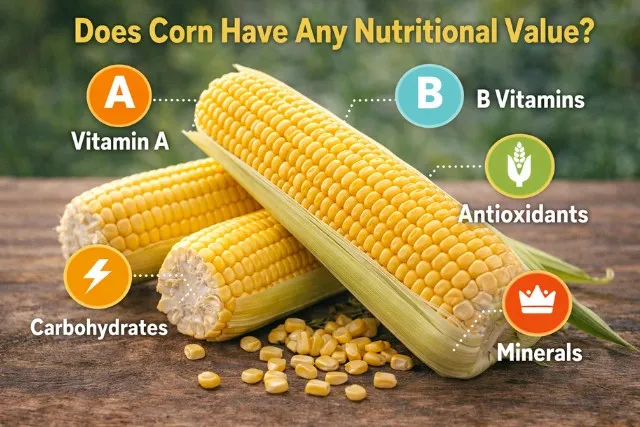
If you’ve ever asked your self, does corn have any nutritional value, you’re not alone. Corn is often seen as just a starchy side dish served at barbecues or added to salads . Because it tastes lightly sweet and is rich in carbohydrates, some people assume it offers very little beyond calories.
In reality, the answer to does corn have any nutritional value is a clear yes. Corn contains fiber, essential vitamins, important minerals, and natural plant compounds that support overall health. When eaten in reasonable portions, it can absolutely be part of a balanced eating pattern.
Yes, corn has nutritional value. It contains fiber, carbohydrates, vitamins like B-complex, and minerals such as potassium. When consumed in moderation, corn can support energy, digestion, and overall health.
Does Corn Have Any Nutritional Value? Nutritional Breakdown of Corn
To understand does corn have any nutritional value, we will first look at how a serving of natural corn can be considered a whole grain (All Parts of the Kernel). The reason that whole grains generally contain more of their own nutrient base is because they include all three of the kernel’s components – bran, endosperm, and germ.
So what’s in one boiled serving (100 grams) of corn? Here is a breakdown of the most commonly used types of nutrients:
| Nutrient | Average Amount | Benefit |
| Calories | 90–100 kcal | Provides energy |
| Carbohydrates | 20–22 g | Main fuel source |
| Fiber | 2–3 g | Aids digestion |
| Protein | 3 g | Supports body repair |
| Fat | 1–2 g | Essential for cells |
| Folate | Moderate | Helps cell growth |
| Potassium | Moderate | Supports heart function |
| Vitamin C | Small amount | Supports immunity |
As shown above, does corn have any nutritional value is not a trick question. It clearly offers several nutrients that the body needs.
Important Health Advantages of Eating Corn
Consistent Source of Energy
The complex carbohydrates in corn convert into sugars for continuous energy release over time.
Supports Digestive Function
The fiber found in corn help maintain a regular bowel movement, as well as providing build blocks for a healthy digestive system.
Supports Eye Health
Antioxidants that exist with corn are often quantities of lutein & zeaxanthin. These components serve as tools to help keep an individual’s eyes healthy and protect them from UV light. For any eye-related problems, it’s important to understand when you should go to urgent care for eye issues and treatment options.
Provides Nutrients for Growth
Corn supplies B vitamins, in addition to folate. These nutrients are crucial to proper cellular formation and cellular function throughout the body.
Nutritional Benefits of Corn on the Cob
Does corn on the cob have any nutritional value? Absolutely! Eating sweet corn fresh off the cob is one of the healthiest methods for eating corn because there’s little processing done to the sweet corn before it reaches consumers.
Therefore, it has many of its original nutrients, including being a good source of vitamins and minerals as well as containing large amounts of beneficial dietary fiber and carbohydrates. For that reason it contains a large amount of its original dietary fiber, vitamins and minerals. Cooking methods such as boiling or grilling corn without adding a lot of sauces or oils will keep it healthy too.
Because people take more time to eat corn on the cob (compared to when eating other types of corn), you’re likely to reduce your total amount of food eaten at one sitting.
Nutritional Value Found in Fresh Corn
There are a lot of people, does fresh corn have any nutritional value compared to frozen or canned types of corn. Fresh corn has natural sugars, fiber and vitamins. If eaten right after the corn has been harvested, it will have a lot of taste and very good quality of nutrients. Frozen corn is also a good option to eat as they are frozen soon after harvest.
Canned corn may have added salts; however, they still contain some fiber and carbohydrates.
Does sweet corn have any nutritional value?
Many individuals want to know if sweet corn has any nutritional value because of its flavor. The sugar found in sweet corn is naturally occurring rather than artificial; hence, it will provide your body with energy quicker than the same amount of sugar would. Furthermore, sweet corn contains fiber, which helps to slow down the absorption of sugars within your body and therefore helps to stabilise your blood sugar levels.
Sweet corn also provides you with vitamins and antioxidants in small quantities, which makes sweet corn not just a yummy vegetable.
Can Corn Fit Into a Weight-Conscious Diet?
Corn can fit into a healthy eating plan when portion sizes are controlled. Reasons corn may support balanced eating:
- Corn is high in fiber which can help you feel full
- Corn is very low in fat
- Corn has a satisfying texture which will help reduce cravings
Corn-based products that are processed heavily (like corn chips or corn snack foods), tend to have a lot more calories than whole corn and are less nutritious.
Comparing Corn With Other Common Foods
| Food | Calories (100g) | Fiber Content | Notes |
| Corn | ~96 kcal | Moderate | Whole grain option |
| White Rice | ~130 kcal | Low | Less fiber |
| Potatoes | ~77 kcal | Moderate | Lower carb density |
Corn provides more fiber than white rice and delivers a steady carbohydrate source.
| Type of Corn | Nutritional Value | Best Use |
|---|---|---|
| Fresh Corn | High vitamins & fiber | Most nutritious |
| Frozen Corn | Retains nutrients | Convenient |
| Canned Corn | Moderate (may contain sodium) | Quick meals |
People Who May Need to Limit Corn Intake
Although does corn have any nutritional value has a positive answer, some people may need to monitor intake:
- Individuals managing blood sugar
- People on strict low-carb diets
- Those with rare corn allergies
For most people, corn is safe and nutritious when eaten in moderation.
Is Corn Healthy or Not?
Yes, corn is healthy when eaten in moderation. It provides energy, fiber, and essential nutrients. However, processed corn products should be limited due to added fats and salt.
Conclusion
So, does corn have any nutritional value? Absolutely. Yes—corn is a nutrient-rich food that provides energy, fiber, and essential vitamins.
When eaten in moderation and prepared simply, corn can be a healthy addition to a balanced diet.
Frequently Asked Questions (FAQs)
1. Does corn have any nutritional value or is it just starch?
Corn contains more than starch. It provides fiber, vitamins, minerals, and antioxidants.
2. Does corn on the cob have any nutritional value after cooking?
Yes. Boiling or grilling corn retains most of its fiber and mineral content.
3. Does fresh corn have any nutritional value compared to canned corn?
Fresh and frozen corn are both nutritious. Canned corn may contain added salt but still offers fiber.
4. Does sweet corn have any nutritional value for kids?
Yes. Sweet corn provides energy and essential nutrients that support growth.
5. Can corn be eaten daily?
Corn can be eaten regularly in moderate amounts as part of a balanced diet.

